Showing posts with label Journal of Psychology. Show all posts

Friday, 23 October 2020

Lupine Publishers | Cognition and Comprehension in Students Learning Foreign Language

 Lupine Publishers | Scholarly Journal Of Psychology And Behavioral Sciences


Abstract

Learning is a mental feat that one must overcome especially with a subject that is difficult or if one dislikes. Learning a foreign language also presents its obstacles. Declarative memory and spatial recognition are the two types of memory recall within the hippocampus. Memory is a key aspect associated with language. As Instructors the delivery of materials and activities using short term memory stimulation is extremely important.

Keywords: Cognitive skills; Memory stimulation; Hippocampus; Foreign language; Activity-based learning

Opinion

It is human nature to have some level of apprehension or nervousness when taking on the journey of learning a new language. After all, learning anything, in itself, can be a challenge for many of us. Certainly, it takes effort and concentration. Learning is often seen as a definite mental feat that one must overcome, especially a subject or a concept that we may either dislike or fear. It has been seen that when it comes to Maths or Science, students may often become anxious or uncertain about learning and how he or she may fare in the end. This is a normal reaction to any challenging subject that requires serious study. But what about when it comes to taking on the task of learning a new language? A language that is nowhere close to one’s native tongue. A language that presents itself as an obstacle course full of hurdles and mud pits, waiting to stop anyone in their tracks. Stop them way before they are able to get a good foothold and begin. But this is relative, often, to how a student may perceive learning something new. It could very well be the perception of growing up and already speaking their own native language and now facing the task of a new one.
Having said this, we know that the human brain is designed to function as a sponge when it comes to navigating anything new, especially languages. This is how our memory begins to become rooted and ready to recall any new experience. Our brain has an area within it called the hippocampus which is part of the Limbic system. When it comes to memory and recall, the hippocampus area of the human brain has a vast chore to accomplish. The recall of memory is so fast that we never, ever take consideration of how the brain even does it! Memory is the key to learning and interpreting any new experience especially those associated with language. In children and young teenagers, studies have shown that the brain reacts very markedly to the two types of memoryprocessing pathways that aid in learning. Declarative memory and spatial recognition are the two types of memory recall within the hippocampus that assist in memory processing [1]. Not only are these areas the key to learning in younger students, but research has shown that nerve cells in the brain continue to develop as we grow older [1].
The hippocampus happens to be one of the areas of the brain where nerve cells continue to proliferate and develop as we age, therefore, proving that an older adult student that is a non-native speaker is capable of recognizing and comprehending a new language. So, how does a student learn a new language? How is he or she able to recognize and then comprehend a new language? One part of the learning process is through the methodology of how they are taught. Delivery of materials and activities, such as writing, speaking, reading and grammar are extremely important for instilling the information so that the student is able to maintain what is presented. Another part of aiding the student in their cognition skills and comprehension is through short-term memory stimulation. It has been our experience that this process leads into and eventually becomes part of long-term memory. If either methodology or short-term stimulation are ill-presented, then there is probably not going to be a solidified foundation for that phase of learning.
To be certain of a good foundation, methodology and shortterm stimulation must be consistent. In our observation, we asked several students how they best remembered a new language which was being taught to them. Several responded that they were always able to remember any type of activity-based learning. It can be noted that activities stimulated the pathways of memory, within the hippocampus, that help to associate functional connectivity to what took place. Others said that it was a combination of activitybased and repetition-based learning. The repetition-based learning included the vocalization of words and phrases, as the words and phrases were often written or spelled out and connected to practical everyday situations. This type of stimulation for shortterm memory caused the students to hear and see what was taking place more vividly than if activity only. It has also been researched and proven that activity-based learning relates to physical exercise for the body [2,3], and this may be the cause for preservation and improvement of memory [2], and this may be one of the reasons that adult students may fare well in comprehending and maintaining a new language. The plasticity of the brain and memory have a directly proportional relationship to physical exercise [2]. Depending on whether the new language is phonetic or written, cognition and comprehension will vary from student to student. We all learn at different levels and paces. Since it is a foreign (new) language being taught to the student, there is the natural tendency to try to either associate the language with their native language, or empty their minds and allow their brains to accept and welcome whatever is being taught. Either way, the learning process will be experienced and handled the best way possible according to each individual student. This is something that a good instructor should be aware of periodically as they teach.

Conclusion

In conclusion, cognition and comprehension by the student is also a responsibility of the instructor. The instructor should conduct checks and balances to assure their daily goals of teaching go according to the lesson plan. In doing this, the learning experience is sure to be profitable and rewarding for the student. Otherwise, a student, young or old, does not have a way of measuring their accomplishments for any given day of instruction. Combination of the efforts of the student and guidance from the instructor are a formidable program for success.


https://lupinepublishers.com/psychology-behavioral-science-journal/fulltext/cognition-and-comprehension-in-students-learning-foreign-language.ID.000181.php

https://lupinepublishers.com/psychology-behavioral-science-journal/pdf/SJPBS.MS.ID.000181.pdf

For more Lupine Publishers Open Access Journals Please visit our website: https://lupinepublishersgroup.com/


For more Psychology And Behavioral Sciences Please Click 

Here:https://lupinepublishers.com/psychology-behavioral-science-journal/

To Know more Open Access Publishers Click on Lupine Publishers

Follow on Linkedin : https://www.linkedin.com/company/lupinepublishers

Follow on Twitter   :  https://twitter.com/lupine_online

Tuesday, 8 September 2020

Lupine Publishers | A Review on Gender Differences in Schizophrenia in Indian Settings

 Lupine Publishers | Scholarly Journal Of Psychology And Behavioral Sciences


Abstract

 The present article is a scientific review aimed to explore the various gender differences, which are seen in individuals with schizophrenia. Cultural difference is seen as one of the factors playing a major role in the gender differences of people with schizophrenia. The present article presents a comprehensive review of the research done in the past in the area of schizophrenia, thereby presenting a significant summary of the previous research findings. This article focusses on the researches on gender differences in Schizophrenia in Indian context as well as worldwide. It suggests that there are various factors, which have not been further explored, and there is a scope for research in the Indian context, thereby helping to fill in the gaps in the literature related to the factors involved in contributing to the gender differences in Schizophrenia.

 Keywords: Schizophrenia; Gender Differences; Indian context; Worldwide

 Introduction

 Schizophrenia is one of the widely studied disorders across the globe. It is the most widely researched topic by scholars worldwide. It is a chronic and disabling mental illness affecting millions of people worldwide [1-5]. The annual prevalence of Schizophrenia worldwide is 0.2-0.4/1000 [6]. The prevalence of Schizophrenia in India is 3/1000 [7]. The annual incidence rates obtained were 4.4 and 3.8 per 10,000 for rural and urban areas, respectively. There are many gender differences observed in the individuals with Schizophrenia. Men tend to show more Negative symptoms as compared to women who display more of Affective symptoms [8]. Gender differences in terms of prognosis is noted, where women have better outcomes in terms of clinical course and occupational and social functioning [9-11]. Disability being one area where gender differences are evidently seen, men face disability in occupational functioning [12] whereas women in the marital functioning [13]. The cumulative lifetime risk is the same in both the genders [14].

 Prevalance and Incidence

 Sex differences in the incidence and prevalence of Schizophrenia may be dependent on the stringency of diagnostic criteria applied. When the diagnostic criteria are broader, there sex differences are less significant [15].

 Age of Onset

 Majority of studies done in this area suggests that men have an earlier age at their 1st hospitalisation as compared to woman [16,17]. They further noted that these differences in the age of 1st hospitalisation have ranged from 2-6 years. Another research suggests that there has been a general shift in the age of onset between both genders, with women being at a higher rate to have a later onset of symptoms regardless of when hospitalisation first occurred [18]. Castle and [3,8] did a prospective study where they go the average onset of males, which was 31.2, was almost 10 years younger than the average onset age for females, which was 41.1. In addition, when family ratings of then1st appearance of Schizophrenic symptoms was used, it was clearly seen that men show an earlier onset of schizophrenic symptoms than women [7,10]. This difference in the age could also be affected by the familial values versus non-familial status. Albus and [5] conducted a study to see the differences in the age of onset related to familial and nonfamilial status and found that there is no difference in onset age in familial cases of schizophrenia (38 Male-male pairs and 29 femalefemale pairs). It was also evidently seen that the age of onset of earlier for males in non-familial cases. It is widely seen that females have a much later onset of Schizophrenia. Researchers suggest that the females also have a better course of illness than males. They suggest that these two phenomena are related to one another, I.e., worse subtype of illness occurs earlier and hence results in later onset in women results in a less aggressive illness thereby resulting into a better outcome. These views are encouraged by epidemiological literature to s great extent [6].

 Premorbid Functioning

 Andia [3] did a research on the sex differences in the premorbid functioning in individual with schizophrenia. It was found that females had a higher level of functioning which majorly included greater educational attainment. It was also evidently found that females had a greater likelihood of getting married prior to their onset of illness. There is a positive correlation between premorbid functioning and prognosis. Better the premorbid functioning, better is the prognosis for illness. Shtasel, Gur & Heinberg [14] found gender differences in premorbid functioning being worse in men than women. McGlashan and Bardenstein [5,9]

 did a research related to gender differences and found that females had better premorbid functioning and marital adjustment. Symptomatologic characteristics: Gender differences are vividly seen in symptoms and its exhibition. Females are more likely to present with comorbid depression or even anxiety disorders as opposed to males who are more likely to receive a diagnosis for substance abuse or alcohol abuse and difficulties in impulse control during the first psychiatric admission. When the symptoms are expressed, it is seen that men tend to experience more affective flattening and negative symptoms at the time of their 1st episode as compared to females [4]. These results were also supported by the study done by Rachel Willhite in California. In addition, males were found to have more difficulties related to emotions and were found to be impaired on emotional and social withdrawal, blunted affect, poor rapport. Females on the other hand were seen to have severe somatic symptoms.

 Course and Outcome

 Alice & Chue [2] did a study to explore the gender perspective in course of schizophrenia and found that the course was more favourable in women with less smoking and substance abuse. It was also seen that women presented higher rates oh remission, less days of hospitalisation and better response to typical anti psychotics than men. However, research has contrast view related to gender differences in hospitalisation. Haro and his colleagues [1] found that women presented higher risk of hospitalisation than men. Another study done by Usual and colleagues in 2001 reported that number of previous hospitalisation were similar to both men and women. These 3 contradictory results pave way for further investigation in this regard.

 Types of Research Done in India

 Prevalence & Incidence

 The prevalence of schizophrenia in India is observed to be lower as compared to that in the western countries [16]. In addition to this, it was also seen that the prevalence rate in “least developed” countries was significantly lower as compared to emerging and developed countries. One of the factors which might affect this difference would be “under reporting” (Avasthi [5]). Considering the important aspect of the incidence and prevalence rate across gender, various kinds of results have been noted by differences researchers. Rode [3] did a study on 196 individuals having schizophrenia, of which 55.61% were males and 44.39% were females. It is interesting to note these sex differences and understand the factors related to it. This area of research remains least explored in Indian context and is in need of further research.

 Age of Onset

 Similar to the research from western countries, it was seen that the gender differences do exist in the age of onset of schizophrenia in Indian population too Murthy [8] found that the males had an earlier onset of the illness as compared to that of females. The males were seen to develop it 5 years earlier than the females [12]. But another study done by Gangadhar and colleagues found contradictory results. It was seen that there was no difference in the onset age between the genders. Although, it was further seen that the proportion of females was higher in group if under 20 years of age. Janakiramiah [11] said that this could be due the over representation of younger ages. Murthy and colleagues in 1998 did a study and found no sex differences in the age of onset. These studies contradict in results thereby paving a way for further research. It is important to find that if the difference in the onset age is really a true onset age or age at case finding. Many factors could affect it and they play a major role. It can be highly possible that the early hospitalisation in men is due to quicker response to symptoms by society rather than early manifestation. It is also possible that the females are cared at home prior to diagnosis which postpones hospitalisation.

 Premorbid Functioning

 Stusser [9] reported various types of premorbid abnormalities in individuals with schizophrenia. These abnormalities are exaggerated in intellectual and social areas. Foerster [13] added to these results that such abnormalities I’m the premorbid functioning are seen more in men as compared to women who develop schizophrenia. Other studies also supported the findings where in it was seen that males have higher premorbid abnormalities than females Childers [11]. Retrospective studies reported children seeking mental health services and those at high risk suggest similar results. These premorbid deficits also result in an early onset of illness especially in Male gender. According to the neurodevelopmental model of schizophrenia, the premorbid functioning has abnormal development in early years. Crow [10] confirmed this view adding gender differences related to it. Men have an irritable, disagreeable premorbid functioning. They also tend to be defiant of authority, whereas women tend to be secure and shy and participate less in groups [1,6].

 Clinical Representation

 Gender also influences the way the symptoms are expressed. Seeman [1] did a research and found that females are seen to have more affective symptoms and fewer negative symptoms. They also tend to get a diagnosis of schizoaffective disorder. Roberta & Handel [4] found that females with schizophrenia tend to be more hostile as compared to males. They also are physically active and dominating, with more sexual delusions. They tend to be more emotional than men. McGlashan & Bardenstein [6] did a study and results were consistent with earlier findings that women experience affective symptoms and less negative symptoms. They also said that females exhibit more or anxiety and paranoid symptoms. The meaning of symptoms seems differ across genders and manifest in different ways. Symptoms of withdrawal and dependency reflect as depression syndrome in women whereas negative symptoms in men.

 Course and Outcome

 Thara [1] did a longitudinal study of 25 years in madras and found that there were no differences in genders in the course and outcome of schizophrenia. These results contradict the results from western countries. Although, there have been studies which support that women have favourable outcomes than men. Dutta & Kapur [7] did a research related to course and outcome of schizophrenia and the gender differences in it. They looked at the prognostic factors and found a negative correlation between chances of improvement and duration of illness. Shorted the duration of illness (less than one year), higher are the chances of improvement. Other factors playing important role in improvement are no family history of mental illness, acute onset and younger age. It was also seen that gender and previous history of mental illness had no prognostic significance.

 Cultural Influences

 “Culture” plays a very important role in the entire journey of schizophrenia especially in the Indian context. Various studies focus on the culture and its influence on overall functioning of individuals with schizophrenia. Loganathan and Murthy did a research on gender differences and doing marriage, job and children as most important factors being affected. Women had a ear if rejection and were not comfortable disclosing about their illness to their husbands. They used concealing as a strategy. Females also preferred to stay unmarried. It was seen that separation was a common event occurring when told about their illness. Women who expecting were forced to abort their child, and of given birth, were separated from child. On the other hand, men with schizophrenia, faced a lot of frustration in securing jobs. They were highly stigmatised. It was therefore seen that women were separated or divorced while more men remained single.

 Lacunae in Researches Today

 The “culture” as a factor which broadly influences the expression of symptoms across genders needs to be investigated further. This investigation may help to identify the unexplored link between the illness and related factors. In the Indian context, religious influences need to be investigated further. To determine various causal mechanisms across the genders, longitudinal studies need to be done.

 Studies Required in Indian Setting

 The prevalence and incidence of schizophrenia is seen more in men in India. But the reasons for this higher proportion in one gender remains unexplored. Ignorance and underreporting could be some factors that can be studied in Indian context. Factors involved in favourable outcomes for women in Indian context can be studied further Another area which needs to be explored are the religious influences on the overall course of schizophrenia. Studies related to practising spirituality and outcomes of schizophrenia can be done.

 Conclusion

 The evidences noted throughout the paper point towards general susceptibility across genders for schizophrenia. Despite of contrary results in various studies, most of the work consistently show that males are more prone towards early onset, have negative symptoms and less favourable outcome towards Schizophrenia in both, Indian as well as western context. However, research done in India has been without much structure and organisation. Wellcoordinated studies are needed to arrive at clear, structured and organised reports of the gender differences in India. In addition, the results can also be used effectively in planning for gender-sensitive mental health services in India.

  https://lupinepublishers.com/psychology-behavioral-science-journal/pdf/SJPBS.MS.ID.000158.pdf

https://lupinepublishers.com/psychology-behavioral-science-journal/fulltext/a-review-on-gender-differences-in-schizophrenia-in-indian-settings.ID.000158.php

For more Lupine Publishers Open Access Journals Please visit our website:

https://lupinepublishersgroup.com/

For more Psychology And Behavioral Sciences Please Click Here:

https://lupinepublishers.com/psychology-behavioral-science-journal/ 

To Know more Open Access Publishers Click on Lupine Publishers

Follow on Linkedin : https://www.linkedin.com/company/lupinepublishers

Follow on Twitter   :  https://twitter.com/lupine_online

Lupine Publishers | Thumbler


Thursday, 3 September 2020

Lupine Publishers | Prevention Methods of Posttraumatic Stress Disorder (PTST) in Cancer Survivors

 Lupine Publishers | Scholarly Journal Of Psychology And Behavioral Sciences


Introduction

It is quite appropriate to say, people are less likely to look for diagnostic ways of cancer because of the fear of having cancer. In addition, many people have phobias of cancer treatment methods (such as surgery, chemotherapy, and radiotherapy) [1,2]. The fact remains that, many people are unwittingly exposed to the posttraumatic stress disorder (PTST) because of severe stress [3]. Nevertheless, many researchers do not believe to the psychology complications of cancer, but psychological distress during and after cancer treatment increased concerns about sexuality, intimacy, and physical well-being. These disorders can occur after the stressor agent such as cancer [4]. It is widely supposed that PTSD is psychological disease and separate from physiological system. Whereas, PTSD can have physiological consequences such as elevated blood pressure, cholesterol, and cortisol levels [4]. However, disabling subsyndromal PTSD symptoms is not known for each individual, but the consequences of this disorder make it more important to treat it [4,5]. Distress and anxiety and less optimal quality of life are caused by PTSD in cancer survivor. It would be better to say that PTSD has a direct effect on the quality of cancer treatment. As detailed, patient’s spirit has a great impact on the positive response of cancer to chemical drugs and radiation doses during treatment. Also, treatment conditions can get worse PTSD. So that, the treatment environment, the attitude of the treatment technicians plays an important role in the recovery and doesn’t involve them to PTSD. Passing on now to treatment methods of PTSD, we should try to suppress PTSD and comorbid symptoms by utilize treatment methods. Variety of psychotherapy (such as eye movement desensitization and reprocessing and cognitive restructuring method) and pharmacotherapy (such as prazosin, anticonvulsants and risperidone) that have been practiced on patients who suffer from PTSD symptoms induced by cancer that we will discuss below. Prazosin Utilize in PTSD is effective, particularly in reducing nightmares and improving sleep. PTSD is often associated with alcohol misuse, prazosin can reduce alcohol dependence [6]. Anticonvulsants have some beneficial attributes in treatment PTSD, particularly where irritability and a startle response are prominent [7]. Risperidone is associated with improvement in overall PTSD symptoms and specific sleep variables [8]. Some resources presented that benzodiazepines (BZDs) are treatment drugs for PTSD [9], But to be honest BZDs should be considered relatively contraindicated for patients with PTSD. Because it caused to worse psychotherapy outcomes, aggression, depression, and substance use [10]. Eye movement desensitization and reprocessing (EMDR) is faster and more effective psychotherapy method than other treatments. This method is a complex treatment that incorporates many different interventions, including imaginal exposure and free association [11]. Cognitive restructuring method included socratic questioning, guided discovery, the devil’s advocate technique and determining the pros and cons of the validity of the assumption. Also, it has vital role for the effectiveness of the intervention [12]. Patients follow up after treatment is one of the most important in radiotherapy. Important considerate to the PTSD symptoms besides clinical examination after cancer treatment can help improved patient cancer. However, the emergence of PTSD can have a direct effect on the cancer treatment benefits. Thereby PTSD can pose a big challenge for cancer treatment researchers. The importance of this issue could provide the basis for a new collaboration between psychologists and oncologists to treat cancer with high therapeutic benefit without side effects.

https://lupinepublishers.com/psychology-behavioral-science-journal/pdf/SJPBS.MS.ID.000156.pdf

https://lupinepublishers.com/psychology-behavioral-science-journal/fulltext/prevention-methods-of-posttraumatic-stress-disorder-in-cancer-survivors.ID.000156.php

For more Lupine Publishers Open Access Journals Please visit our website:
https://lupinepublishersgroup.com/
 For more Psychology And Behavioral Sciences Please Click Here: https://lupinepublishers.com/psychology-behavioral-science-journal/
To Know more Open Access Publishers Click on Lupine Publishers
Follow on Linkedin : https://www.linkedin.com/company/lupinepublishers
Follow on Twitter   :  https://twitter.com/lupine_online


Saturday, 18 July 2020

Lupine Publishers | Thoughts are Mental Model to Create Your Past, Present and Future Life

Lupine Publishers | Scholarly Journal Of Psychology And Behavioral Sciences

Abstract
This piece of research communication I wrote on the basis of my personal experience of life with my own relevance which would be great contribution to Human Psychology. I coined very fresh term “Human Brain Quantum Psychology (HBQP)” [Refer my Article on it.] and using HBQP how one can switch his/her life from worst to good, good to nice and Nice to Excellent with the creation of positive thoughts for positive mental model which form successful and joyful life of everyone using “Law of Attraction” and the principles of “Quantum Mechanics” in universe must use positive thoughts for needs, desires, love, things, person, home, fame and family and universe offer according to what thoughts send by you using your all over available and surrounded electromagnetic force and frequencies to the Universe to structure present and future of someone as they want. Whereas past also because of same happened (Figure 1).
Introduction
Above illustration gives you the idea what I wanted to interact with you and what is the point of attention, switching and refurbish your life if bad or average with turning it into excellent one. Everything start with your thoughts, if your thoughts are negative your feeling and thinking would be bad and in result bad frequencies send to the Universe and bad life in return because universe just obey your command what your thought emits without knowing good or bad, hence unwanted life back. If your thoughts are positive your feeling and thinking would be good and good frequencies send to the Universe and in return Universe fulfill your good wishes in the form of happy, healthy and wealthy life. Therefore everything even Universe and your life start with thoughts process which create your mental model, if thoughts are negative tends to bad/ frustrated/stressed/ depressed/weak/demotivated mental model whereas if thoughts are positive tends to good/happy/strong/ motivated/.innovative/confident mental model. This is because when your brain processing and formulating thoughts the law of attraction and principles of Human Brain Quantum Psychology (HBQP) as well as Quantum Mechanics work on it for you and emit frequency with electromagnetic everywhere near take formation of frequency which emit by your brain thoughts to the Universe and the Universe tune your frequency with match frequency as wishes of life and wished life send back to you from Universe and this is the universal fact you believe or not on it. Hence every time think positive thoughts then Ask, Believe and Receive all your wishes and your dreams come true with your positive mental model to form “Your Life and Your Own Universe”.
For more Lupine Publishers Open Access Journals Please visit our website:
https://lupinepublishersgroup.com/
 For more Psychology And Behavioral Sciences Please Click Here: https://lupinepublishers.com/psychology-behavioral-science-journal/
To Know more Open Access Publishers Click on Lupine Publishers
Follow on Linkedin : https://www.linkedin.com/company/lupinepublishers
Follow on Twitter   :  https://twitter.com/lupine_online


Tuesday, 3 March 2020

Lupine Publishers | The Impact of Virtual Reality on Mood States Prior to Blood Donation

Lupine Publishers | Scholarly Journal Of Psychology And Behavioral Sciences

Abstract
Go to
Virtual Reality (VR) has shown promise as a non-pharmaceutical intervention for both anxiety and pain management. Consequently, specially designed VR experiences may be a useful tool to counteract anxiety during procedures that require a blood draw. In the current study we examined negative and positive mood states before and after a brief VR intervention at a Red Cross blood drive. Results demonstrated a significant increase in positive mood states (Happiness, Calmness) and a reduction of negative mood states (Tension, Fatigue). These results support the accumulating evidence that VR has the potential to act as a powerful and effective tool for anxiety and stress management in anxiety provoking situations.
Keywords: VR; Virtual reality; Healium; Blood donation; Anxiety; Stress; Needle Fear; Needle phobia
Introduction
Go to
Needle injections are an integral part of many medical procedures, yet “needle fear” and “needle phobia” frequently result in the avoidance of necessary treatments and an unwillingness to donate blood [1]. Studies examining fear of needles have reported prevalence estimates as high as 91% [2]. Because this anxiety has real life consequences, a recent review of research on needle fear recommended that “greater attention should be given to evidence-based approaches to alleviate fear during injections” [1]. When considering interventions to assist in the reduction of needle fear, virtual reality seems like an obvious choice. VR has already demonstrated its utility in the treatment of anxiety disorders including phobias and PTSD [3,4]. However, most of these studies incorporated VR into an existing therapeutic context, making it difficult to isolate the impact of the VR intervention from other aspects of treatment. One recent study examined the ability of a stand-alone VR experience to reduce state anxiety in an anxious population [5]. The results indicated that both the VR and a rest control condition significantly reduced reports of anxiety. However, only the VR experience shifted brainwave activity in a manner consistent with reduced nervous system arousal [5]. To our knowledge, only one study has specifically examined the use of VR during a blood draw. This study was conducted with a pediatric population and demonstrated that specific VR experiences significantly reduced pain and anxiety when compared to “treatment as usual” [6]. In the current study, we sought to explore the potential of using a calming VR experience to increase positive mood states and decrease negative mood states just prior to a needle stick at a community blood drive.
Materials and Methods
Go to
Participants
33 donors at a community Red Cross blood drive volunteered to participate. The study consisted of 19 females and 14 males aged 15 to 70 (M= 25.85, SD= 16.35). All participants provided informed consent through the Red Cross.
Materials
Virtual reality
The VR experience used an Oculus Go headset with Healium software. A 4.5-minute guided experience encouraged the user to use their internal feeling state (positivity) to transform a VR landscape. The experience begins in a rather bleak setting with a large tree covered in graffiti. The area around the tree is barren with trash strewn about. As the experience progresses, the user is coached through engaging in feelings of positivity and gratitude which gradually transforms the tree and surrounding environment into a clean, lush landscape (see Figure 1).
Figure 1: Screen shot of “The Big Tree” experience from Healium software.
Lupinepublishers-openaccess-journals-psychology-behavioral-science
Brunel Mood Scale
The Brunel Mood Scale [7] consists of 32 mood descriptors that are categorized into 8 unipolar dimensions: anger, tension, depression, vigor, fatigue, confusion, happiness, calmness. Using a response frame of “how do you feel right now?” subjects indicated the extent of their experience of the mood descriptors on a 5-point scale (0= not at all, 1= a little, 2= moderately, 3= quite a bit, 4= extremely).
Procedure
Go to
Participants at a community blood drive were invited to experience “The Big Tree” virtual reality (VR) experience in the Healium software platform just prior to the needle stick. Participants completed the Brunel Mood Scale before and after the VR experience. A Matched Pair Analysis was used to examine pre - post significant differences for the 8 aggregated Brunel Mood Scores. The data were grouped by Mood to create an Across Group analysis.
Results
Go to
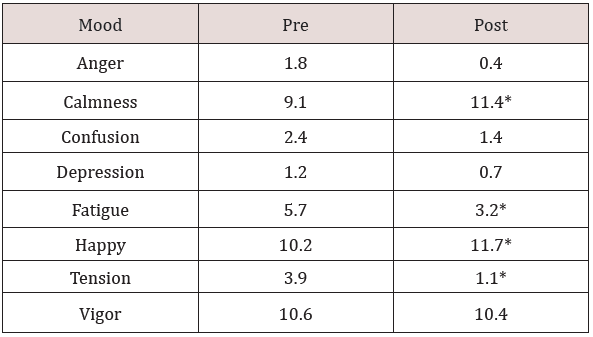
Table 1: Mean of Pre and Post Scores for the 8 aggregated Brunel Moods.
Lupinepublishers-openaccess-journals-psychology-behavioral-science
A matched pairs analysis with time of testing (pre-post) as independent variables, and scores on the Brunel Mood Scale as dependent variables, showed a significant effect (F(2,256)= 52.79, p<.0001). The pre-post means for each scale are displayed in (Table 1). When presented as a Tukey mean-difference plot (see Figure 2), it is clear that 4 of the aggregate mood scores were significant (p <.05). Specifically, Calmness and Happy increased from prepost while Tension and Fatigue decreased significantly from prepost.
.

Discussion
This study demonstrated that an inexpensive and brief VR intervention can have a significant positive impact on mood just prior to a needle stick, reducing tension and fatigue and increasing feelings of calmness and happiness in an adult population. This is consistent with other research showing that VR reduces pain and anxiety better than “treatment as usual” in a pediatric population during a routine blood draw [6]. The apparent success of VR in reducing anxiety may be, in part, due to the strong feeling of “presence” achieved in these environments [8,9]. “Presence,” is defined as the subjective feeling of being in another place. As there are multiple visual and auditory cues in a traditional hospital or blood donation setting that could trigger or exacerbate an anxiety response, removal of these cues may be helpful in reducing anxiety. In addition, rather than simply removing a potentially stressful environment, VR can replace these stressful cues with an environment designed to be soothing, comforting, and mood enhancing. VR research for pain management has shown that this strategy works quite well. For example, VR experiences designed to assist burn victims often utilize visual scenes that include cold weather and snow, taking advantage of the brain’s tendency to respond physiologically to environmental cues. A recent review of research examining VR for pain management in burn victims concluded that the addition of VR to dressing change or physical therapy sessions significantly reduced pain intensity, time spent thinking about pain, and unpleasantness [10]. The current study adds to the accumulating evidence that VR has the potential to make basic medical procedures, such as a blood draw, much more tolerable, potentially improving patient compliance and willingness to donate blood [11]. Obviously, this study lacked a control group and is therefore limited in the degree to which the results can be generalized. Future studies would benefit from using a randomized control procedure, allowing subjects to use the VR experience during the blood draw (rather than prior to the needle stick), and examining a variety of additional outcome measures as well as personality characteristics.

https://lupinepublishers.com/psychology-behavioral-science-journal/fulltext/the-impact-of-virtual-reality-on-mood-states-prior-to-blood-donation.ID.000150.php

https://lupinepublishers.com/psychology-behavioral-science-journal/pdf/SJPBS.MS.ID.000150.pdf

For more Lupine Publishers Open Access Journals Please visit our website: https://lupinepublishersgroup.com/
For more Psychology And Behavioral Sciences Please Click
Here:https://lupinepublishers.com/psychology-behavioral-science-journal/

To Know more Open Access Publishers Click on Lupine Publishers
Follow on Linkedin : https://www.linkedin.com/company/lupinepublishers
Follow on Twitter   :  https://twitter.com/lupine_online

Locus of Control and Vulnerability to Peer Pressure: a Study of Adolescent Behavior in Urban Ghanaian Context

  Abstract Peer pressure is one thing that every individual is vulnerable to and has faced before at some point in their lives. It is beco...